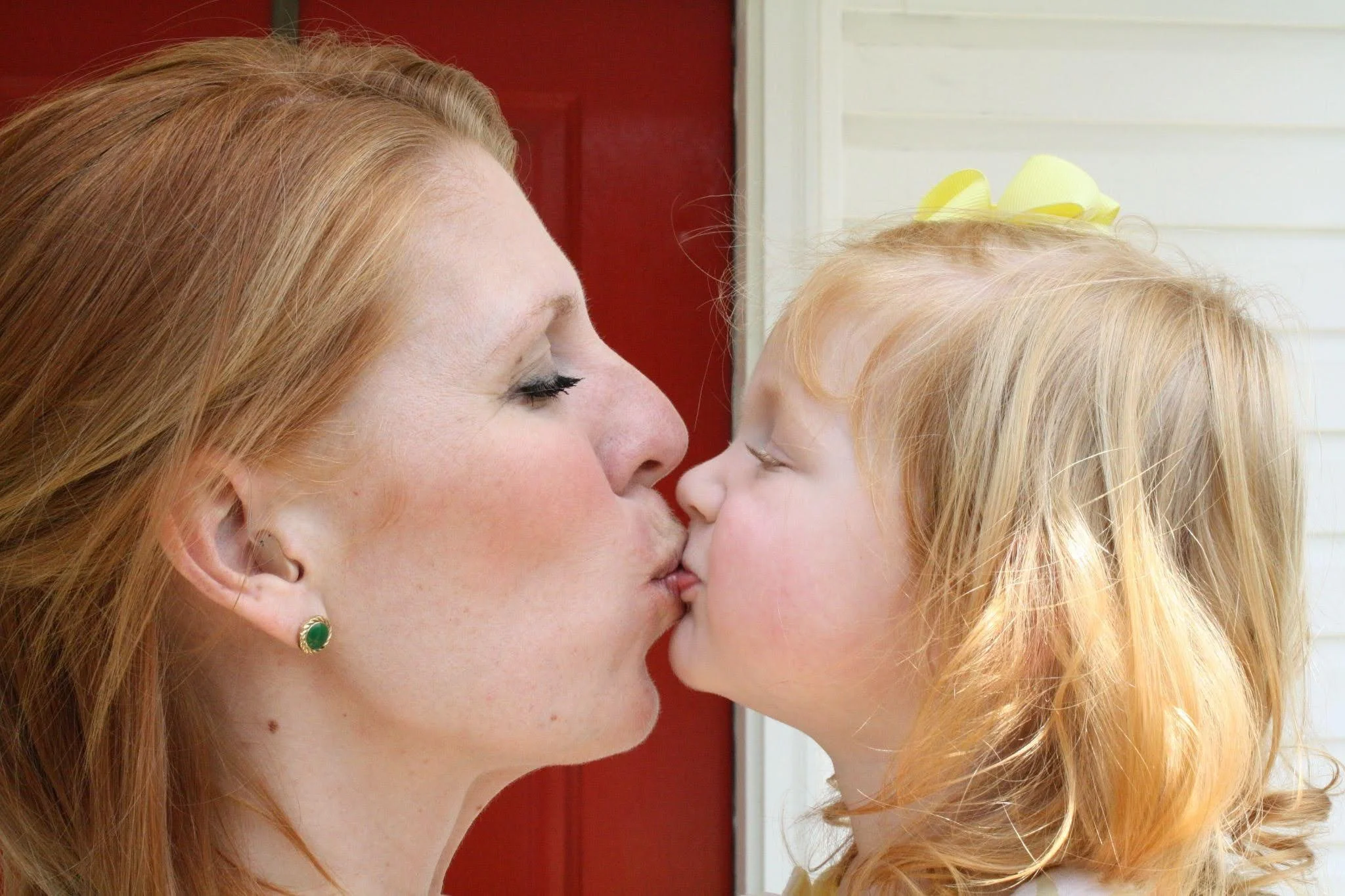
What?! Where did you put Kelly and who’s writing this post?
Don’t worry - it’s still me and for the most part, I really do see the world through the lens of attachment. I believe that everything and everyone would be better off with a secure base with themselves and the ones they love.
However, I’ve been humbled, and I need to tell you about it.
My oldest daughter was recently diagnosed with OCD. Since her diagnosis and specific OCD therapy, I feel like I have her back. She’s more present, silly, affectionate, and is able to tolerate stressors and be flexible. It’s unbelievable, really.
Like any parent who happens to also be a therapist - I turned over every rock to find the answer. I wondered about OCD, but her presentation was not obvious - even to her Dad and me.
Her compulsions are mostly inward and the ones that are outward are socially acceptable and even praised. She has extensive checklists to get things done, and if she couldn’t close her own OCD loop - she would seek reassurance from us. Without having a thorough understanding of OCD, I just thought she was anxious, rigid and super type A. I felt guilty for whatever I must have done when she was little to make her this way.
You’re a therapist. You know how hard it is to trust other therapists to care for the people you love the most. I was so afraid.
Allow me to let you into the dark corners of my parent brain:
What if they pathologize her or me? What if she doesn’t have OCD and they brainwash all of us to think she does and then she doesn’t get better and we’re back to square one? Only this time, we’re worse off because we have less in our pocket book - actual and emotional. We’ll be without hope and in therapy debt.
Thank God for my dear friend, Mary. She is a psychiatric nurse practitioner, specializes in OCD and is possibly one of the best humans on the planet. She spent an hour with me on the phone and let me repeat myself 57 times. I kept naming my fear to her - somehow trying to make sense to myself. Even though my cognitive brain could hang out with her cognitive brain and see clearly that yes, my oldest daughter probably does have OCD and would benefit from therapy with an OCD specialist - I just couldn’t make the jump. My brain understood, but I had a lump in my throat.
What was happening for me?
I’ve been trained to see everything through attachment, human development and neuroscience. From those perspectives, I believe that no one is fixed - we are all in a growth state and any behavior makes sense in a broader context: what happened to you in the past and what’s happening in your present reality.
That perspective has served me very well. I am proud of my ability to assume the best about humans - it has helped me with suffering clients who exhibit difficult behavior. First I assume the best, lean in, co-regulate and slow down. Once I get to see a client’s humanity - we have a connection. This makes me feel like I can work with just about anyone!
This perspective helps me in parenting too. I try to stay steady and emotionally available even when my kids are being jerks. I let them know when they cross a line, and we work together to repair our connection. I also acknowledge my mistakes and then try my best to stay both strong and nurturing.
So, imagine you’re me with a kid who has OCD (but you don’t know it yet). I thought I had everything I needed to help my kids. Attachment theory - check. My own safe and steady base - check (thank you to my own therapy and my amazing partner and a good foundation from my parents).
What else do you neeeeed?
When all the secure bases didn’t work - I had to go outside of what I knew, get uncomfortable and rely on others. I do see the irony in this. A huge benefit of a secure base is to be able to take risks, make choices, potentially fail and still know that you’re going to be ok and you can find your way.
I took the jump. I left attachment theory, with the benefit of a secure base - thank you, attachment theory.
And obviously, I didn’t totally leave attachment theory. Except maybe one time I asked a new client a million questions to make sure he didn’t also have OCD (it’s hard not to see it). Poor guy. He definitely doesn’t have OCD, and I took him down an assessment rabbit hole. Thankfully, the intensive went well, and his marriage is in a good place now.
I have to say it one more time. Thank God for Mary (my friend that I talked to for an hour). I trusted her, and she attuned to my anxious self. She was kind, open and gave me space to be afraid - while asking good questions and giving clear clinical information.
Right after I talked to Mary, I sat on my daughter’s bed and read the note I took while on the phone. I asked my friend, what would you say? And then I wrote down her exact words because I didn’t want to get it wrong:
“There is an OCD process happening in your brain. You want to stop doing this (compulsions) because you see how it gets in the way of life. You don’t like feeling this way when someone interrupts your list.”
(My daughter’s main compulsion is list making and checking off her list).
“When you want it to change but can’t make it change - that means something is happening in your brain. You know it’s excessive but feel driven to do it anyway. Your brain is stuck in a loop that can only feel ‘just right’ after checking off your list. There is a way for it to not be like this forever. You can get to the place of just noticing the urge to complete the list but then not doing it.”
I read every word to my daughter, and she immediately hugged me with relief and said she was ready to start OCD therapy.
I was still scared as we initiated therapy - but it only took about 2-3 sessions to see that it was helping her.
My daughter said it like this “I used to feel dread, like something is terribly wrong with me. Now I feel relieved - Something IS wrong with me!”
We know what it is and we know what to do. What a relief. My daughter has more confidence knowing exactly “what’s wrong” with her. I do too, actually.
What I know about OCD now that I didn’t know before:
OCD has a genetic component (yes there are other people in our family now also starting OCD therapy)
The OCD loop: It starts with an intrusive thought which ends up being an obsession and then ends with a compulsion. Every time the compulsion happens - it temporarily relieves the brain, but the next time it’s harder to not compulse. There’s more nuance to this - but that’s a rough skeleton of the process in the brain.
OCD gets missed a lot - especially those whose compulsions are more internal than external.
OCD latches on to whatever is happening developmentally. If you’re in the phase of learning "right and wrong” (elementary school) - the OCD context might be about fear of cheating off your classmates. The context changes over a lifetime, but the process in the brain is the same.
If you can relate to this, or it gives you permission to hang onto attachment theory, while temporarily letting go of attachment theory - I’m happy! This is quite the journey, isn’t it? The humanness of it all is wild. As a caregiver, therapist and partner - we’re right next to our people and sometimes miles away. If there’s ever any gap I can close or have closed for me, I’m forever grateful.
I love getting emails from you - if this makes you think, tell me about it! It encourages me to hear from you.
PS - The picture is of me and my daughter from the early days. She read the post and gave her blessing to share her story with all of you.
With you,
Kelly